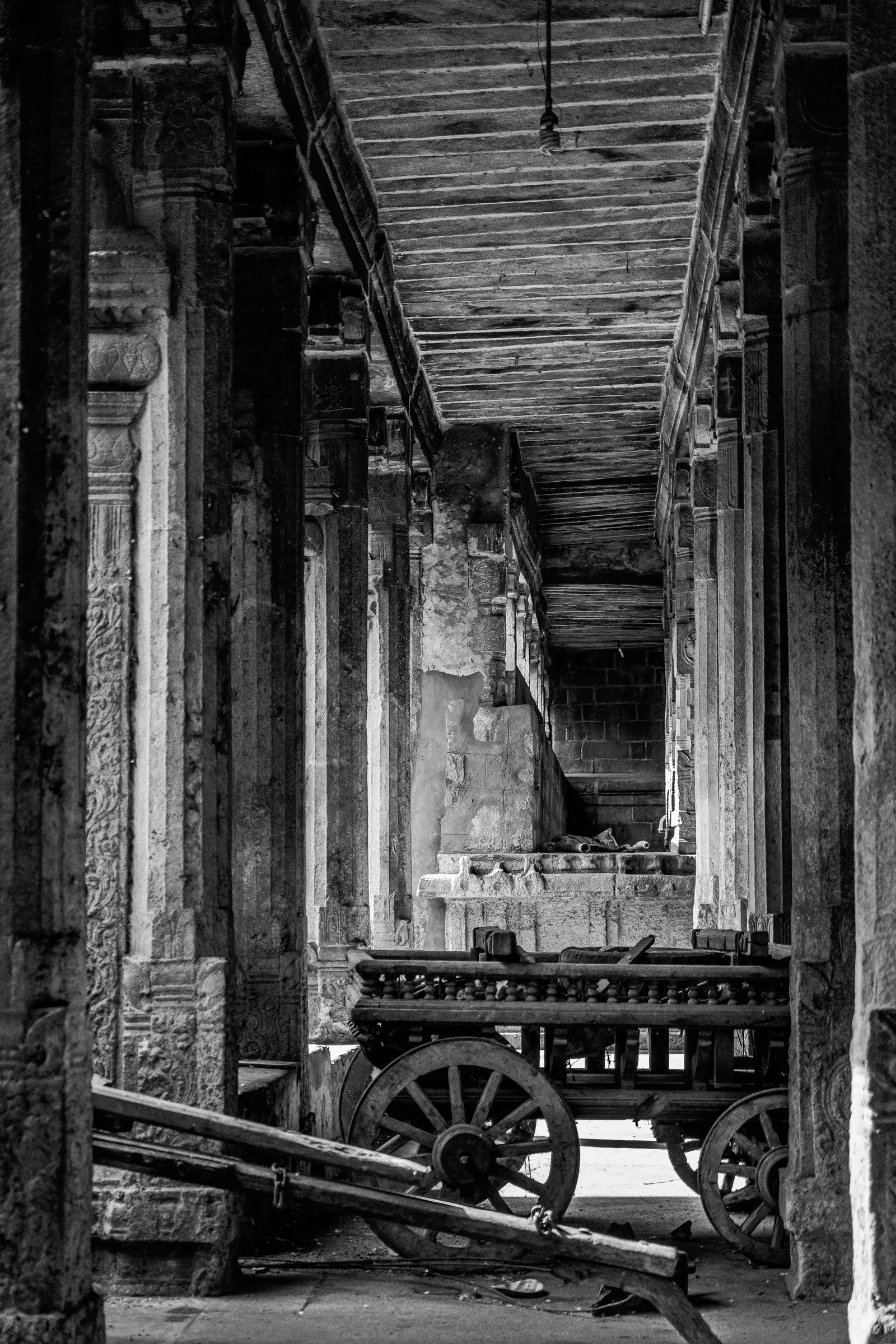
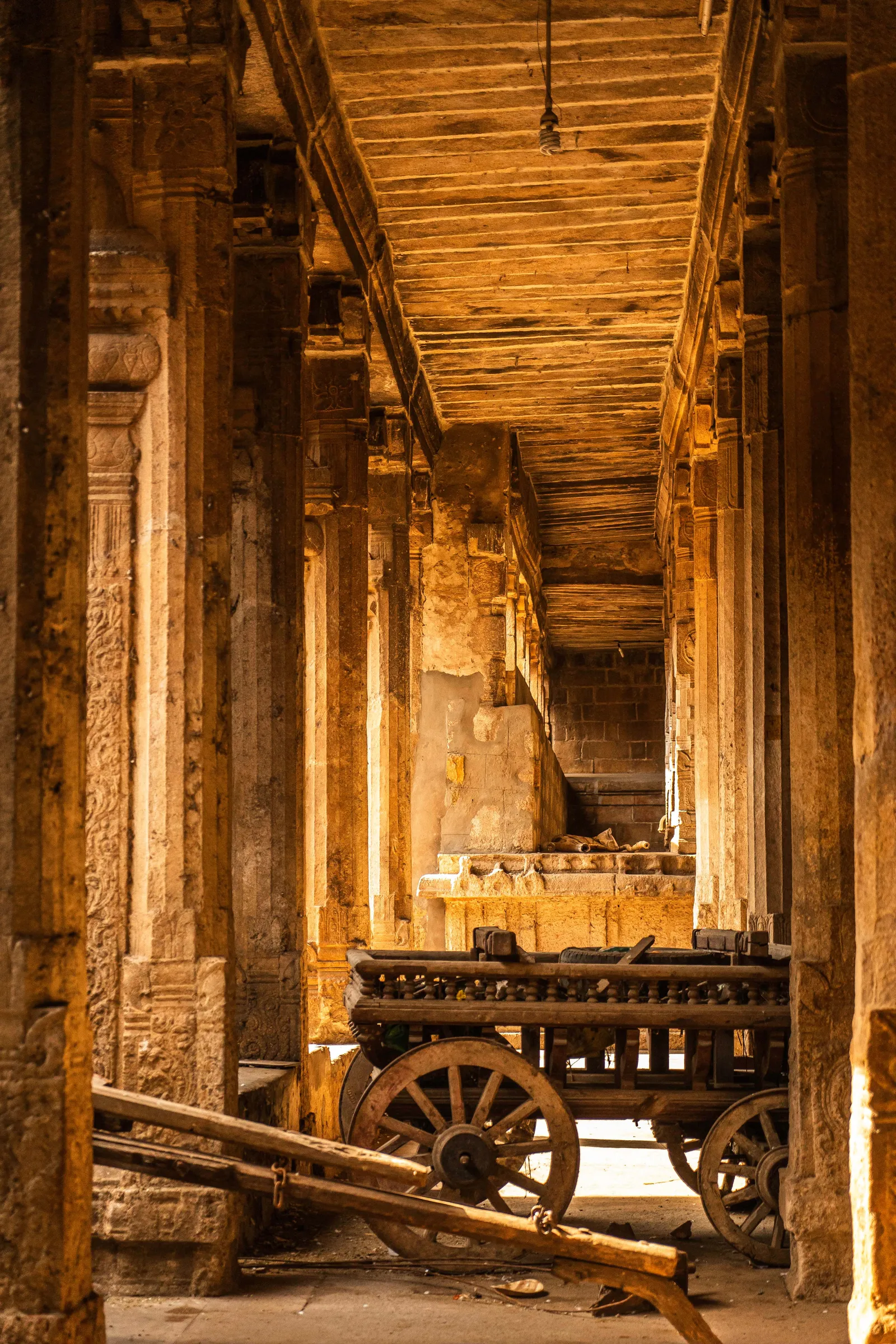
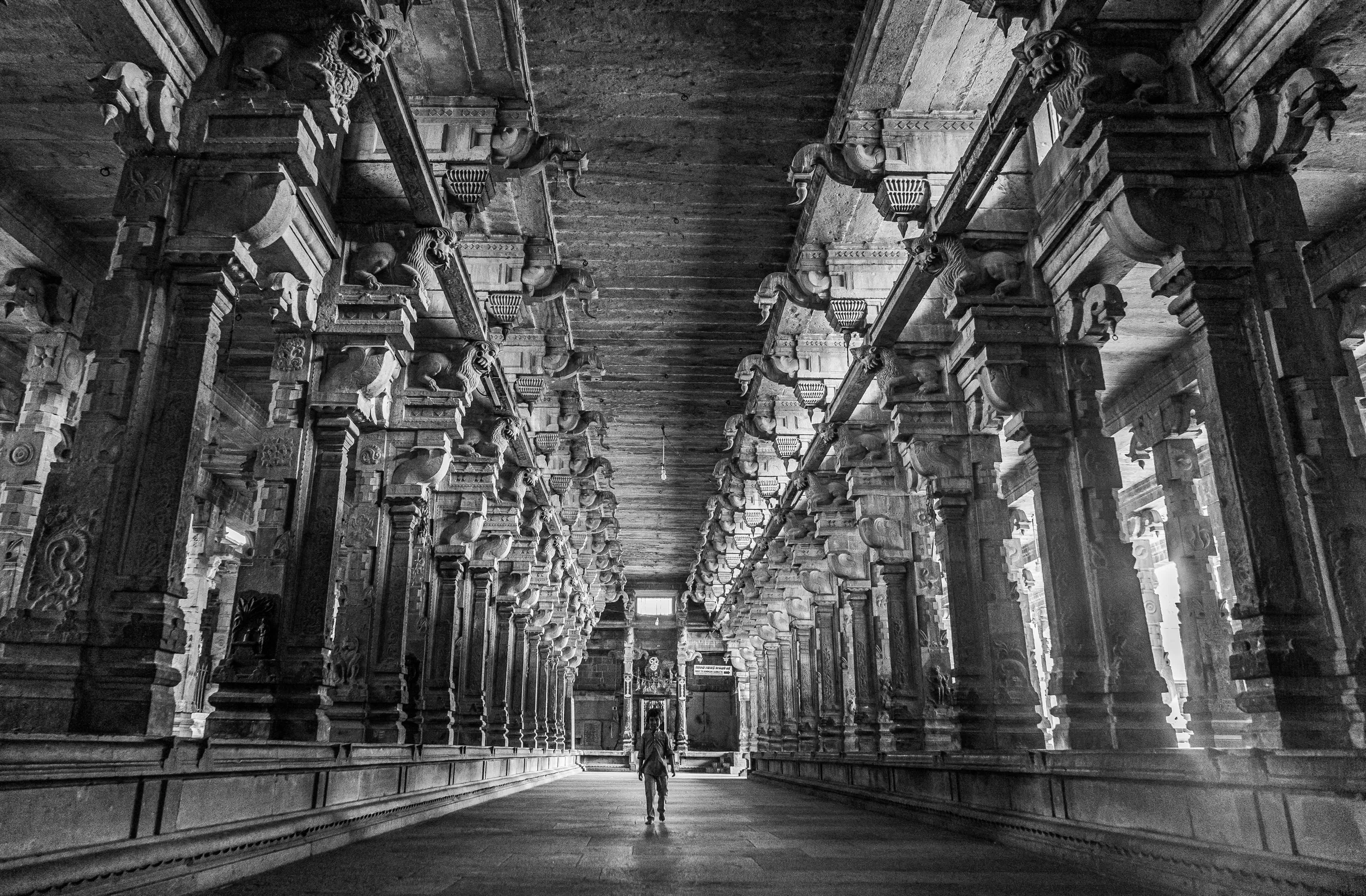
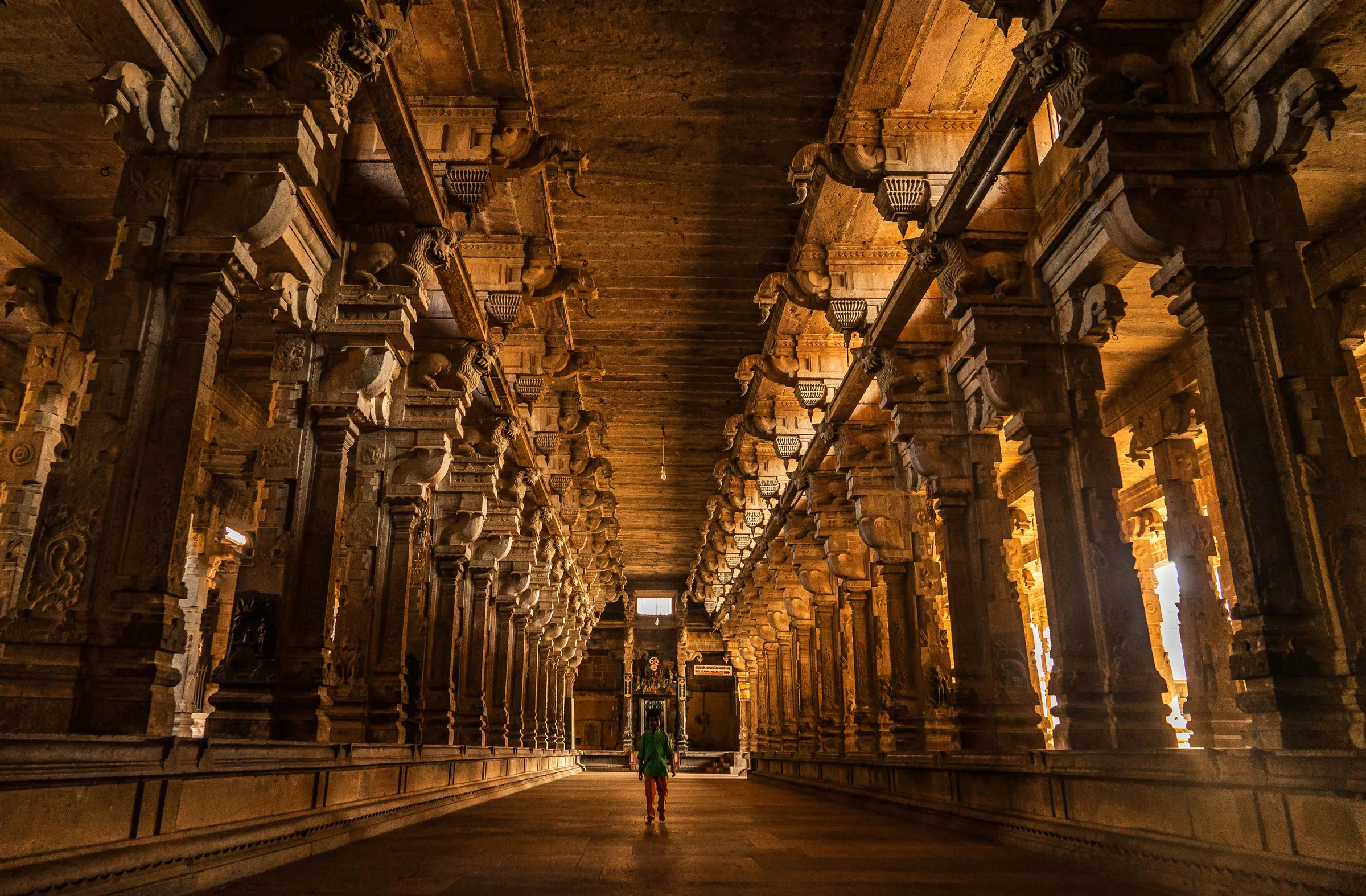
One of the five element temples, where Śiva is worshipped as water. Set on 18 acres beside the Kāvēri near Srirangam, with a separate shrine for the goddess Akhilāṇḍēśvari and an early Chōḷa core within later walls.
The temple is spread over 18 acres and has a shrine for Śiva as Jambukēśvara and a separate temple for the goddess Akhilāṇḍēśvari. The fourth prākāra wall alone is 35 feet tall and 6 feet wide and is called the Tirunīru Madhil, after the sacred ash of Śiva. The temple has nine sacred waterbodies, the Kāvēri among them, and the Jamun tree is its sacred tree.
The few intact remnants from the early Chōḷa days are the images of Śiva in the main shrine and loose sculptures in the thousand pillared hall. The Brahmā, Ardhanārīśvara, Subrahmaṇya and Sambandar images all belong to this period.
02
Archaeological
dated & cited
The temple has over a hundred inscriptions, most from the times of Kulōttuṅga III, Rāja Rāja III and Rājēndra III, with the Pāṇḍyas, Hoysaḷas and Vijayanagara kings also figuring. Many inscriptions survive only in fragments after a large 19th century renovation.
The earliest stone temple here is taken to date to the early 10th century. The Akhilāṇḍēśvari shrine is believed to have once been a fierce Kālī temple where sacrifices were performed.
Protection & condition
ConditionIn worship
03
Mythological
as transmitted
In this tradition Śiva is seen as water, or Appu. The name comes from a legend of how an elephant and a spider worshipped the deity under a Jamun tree, and goddess Pārvatī worshipped Śiva here as a liṅga in the form of water. Tirugñānasambandar, Tirunāvukkarasar and Sundarar have sung of the temple.
Tradition holds that Śiva himself came in the form of a siddhar and asked for sacred ash as the fee for building the great wall. It is also said that Ādi Śaṅkara reduced the ferocity of the goddess by installing multiple Śrī Cakras.
Sources
Pradeep Chakravarthy, 100 Timeless Tamil Nadu Temples
This is an open, reviewed record. If you have spotted an error or have
something to add — a correction, a date, a source, a name in another script —
propose it. Every change is reviewed before it joins the record.
You are suggesting an edit. Click any highlighted paragraph to change it.
“Suggest an edit” makes this entry editable right here — change the text, tell us how to reach you, and send it. No account needed. “Share feedback” opens a short form. Both go through review before anything is published.