01 Architectural
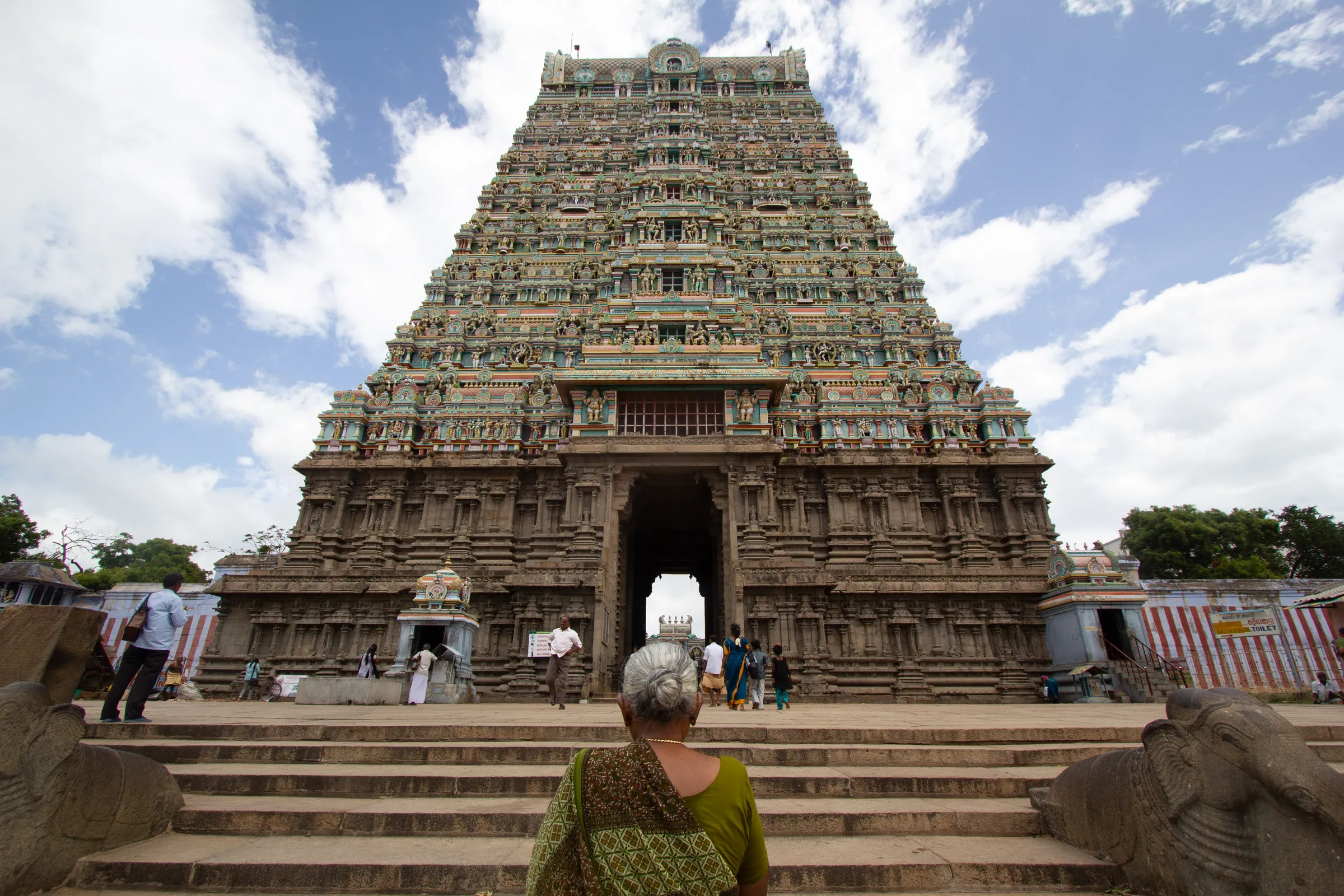
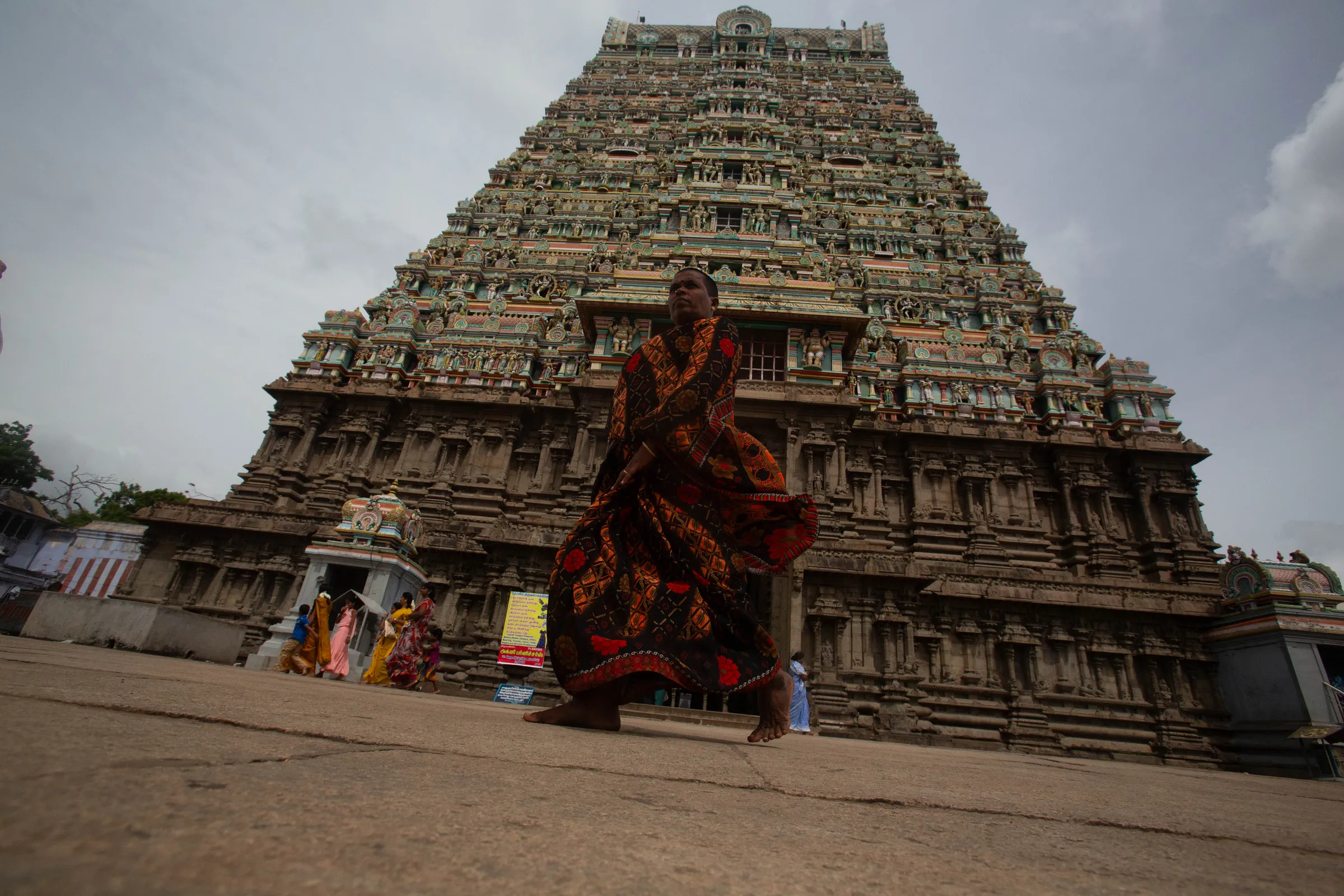
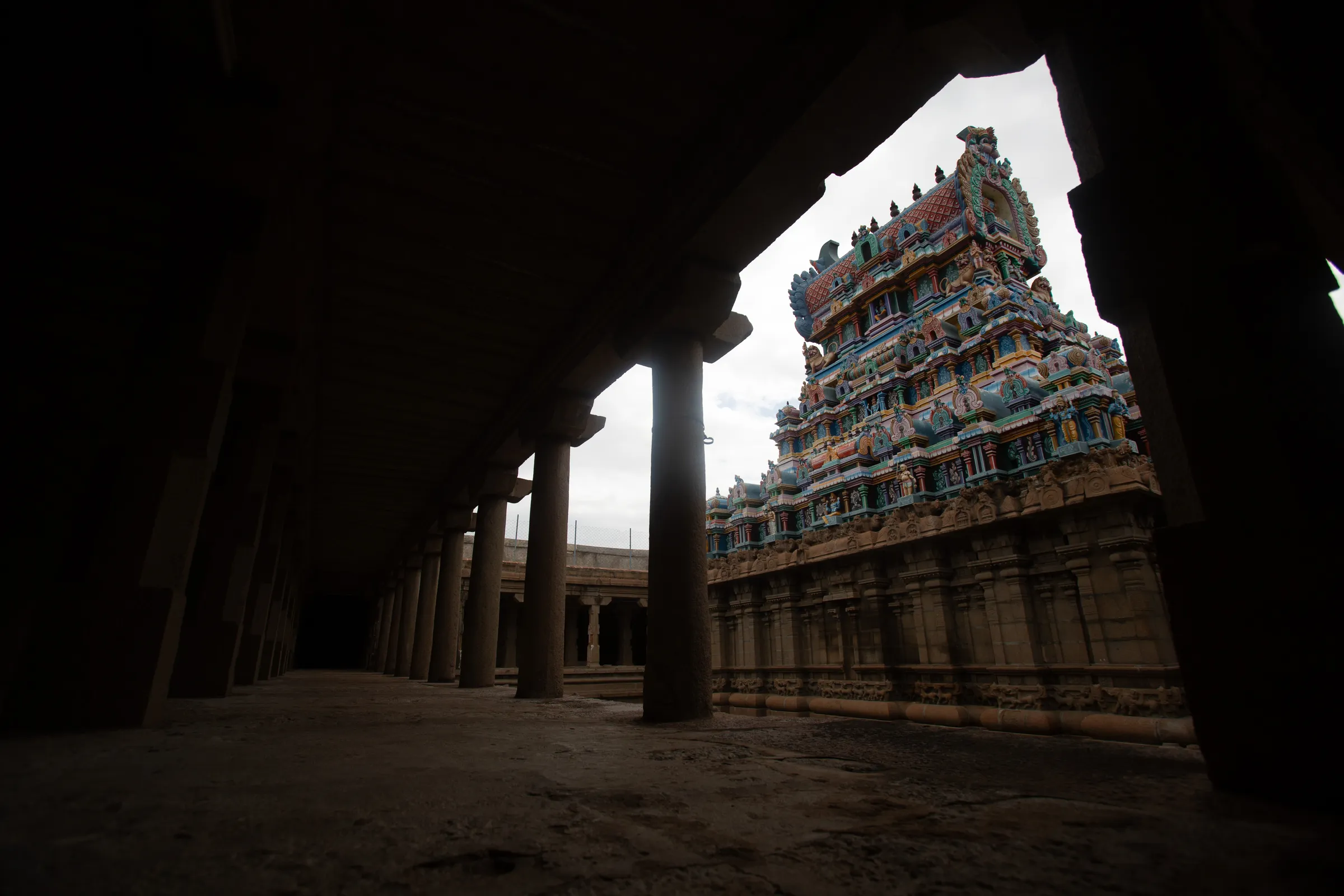
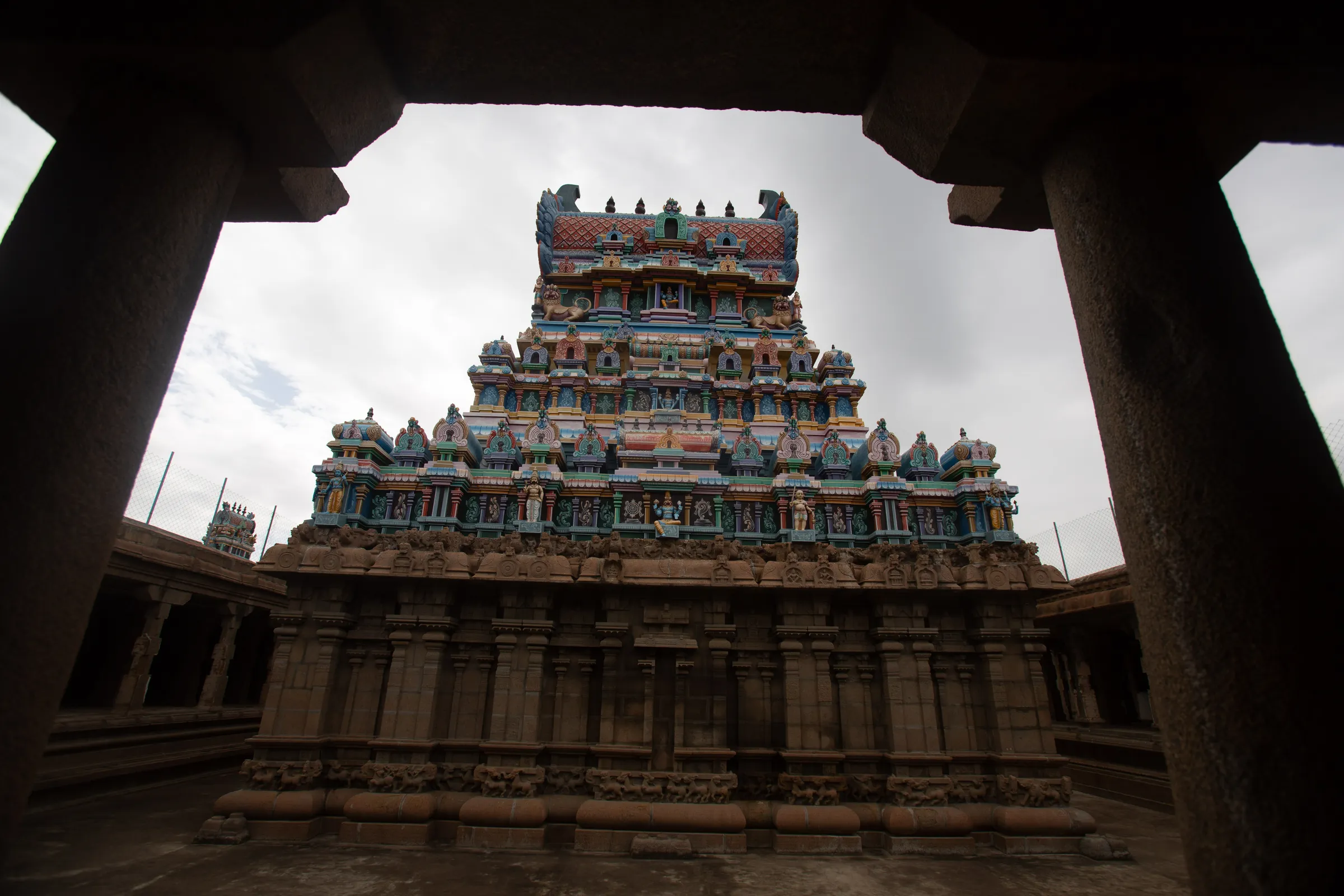
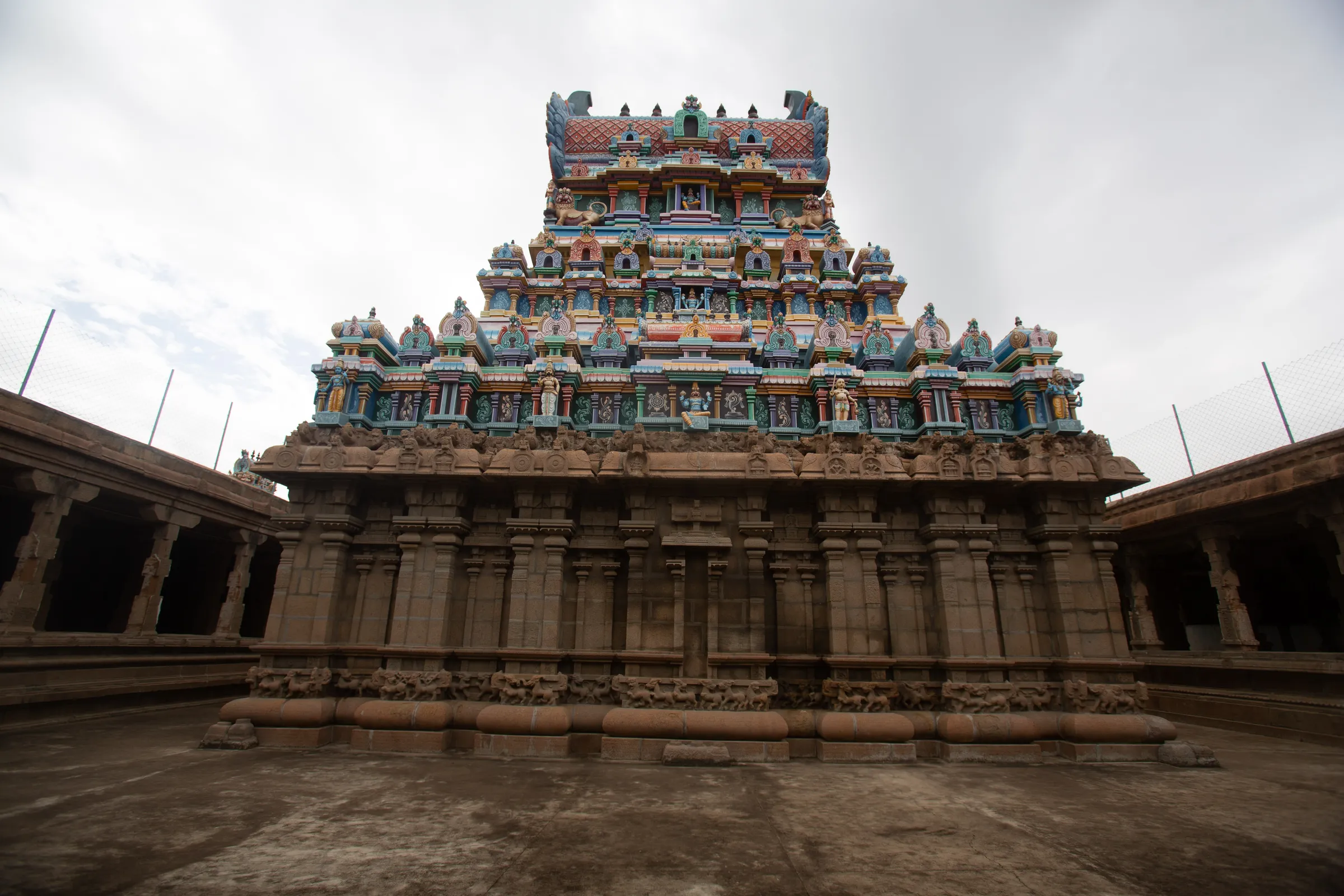
structure & vocabulary The temple has a nine-tiered Rajagopuram, the second largest in Tamil Nadu, and all its shrines are enclosed within a granite wall as in most southern temples. A pillared hall at the entrance leads to the flagpole hall. In the sanctum Viswanatha faces east, with Vinayaka and Subramanya shrines on either side of the hall to the sanctum, and the shrine of Visalakshi parallel to it. Dakshinamurthy, Arumuga, Durga and others are artistically carved in the precinct around Viswanatha and Visalakshi.
The sculptures show the masterly skill of the artisans: Agni Veerabhadra with sword and horn, the musical pillars, and Rathi-Manmadha stand out, and the outer precinct houses the Nayanmars. Among exquisite bronze idols, those of Parakrama Pandya, the builder, and of Kankalamurthy stand out. The temple is unique in having a musical instrument, the Sarangi, played before the Goddess during the evening and night poojas.
02 Archaeological
dated & cited Jatilavarman Arikesari Deva Parakrama Pandya ruled a truncated Pandya Nadu between 1422 and 1463 CE with Tenkasi as his capital. Inscriptions on the walls of the ruined gopuram, cited by N. Sethuraman, record that he built the temple in stages from 1446 CE, consecrated the Shiva Linga in 1447 CE, completed the main shrine, Ardha Mandapa, Maha Mandapa, the Goddess shrine and the Prakara wall before 1451 CE, and laid the foundation for the nine-tier gopuram in 1457 CE. He died in 1463 while it was under construction, and his younger brother Alagan Perumal Kulasekara completed the rest, building the Olakka Mandapa, also called the Kulasekara Mandapa, and in 1473 CE a Vishnu shrine within the Prakara.
A Pudukkottai grant dated 1583 CE states that the temple was built by Parakrama Pandya, and the Sanskrit work Pandyakulodhayam traces the genealogy of the later Pandyas and the story of the temple's founding. An inscription on the four-sided pillar before the gateway describes the construction. Tenkasi must have been established in the 14th century, as inscriptions of 1384 CE in the temple record King Vera Pandian's donation of villages to Brahmins to recite the Vedas. The Rajagopuram caught fire in 1824 CE, was struck by thunder, and remained precarious until 1924; rebuilding of the flat tower began in 1967 and a 180-foot tower was raised by 1990, aided by Shivanthi Adhithanar, hailed as the second Arikesari Parakrama Pandya.
Dating
Consecrated1447 CE · Shiva linga consecrated, by inscription
Begun1446 CE · construction begun in stages
Built in stages by Parakrama Pandya from 1446 CE; the nine-tier gopuram was begun in 1457 CE and completed after his death in 1463 by his brother Alagan Perumal Kulasekara.
Inscription · Walls of the ruined gopuram
He constructed the temple in stages starting from 1446 CE. He consecrated the Shiva Linga in 1447 CE. Prior to 1451 CE the main shrine, Ardha Mandapa, Maha Mandapa, the Goddess shrine and the Prakara wall were completed. He laid the foundation for a nine-tier gopuram in 1457 CE. When the gopuram was under construction, Parakrama died in 1463. Alagan Perumal Kulasekara, his younger brother, completed the rest of the work.
N. Sethuraman
03 Mythological
as transmitted It is told that Arikesari Parakrama Pandyan, while living in the fort he built at Vinthankottai east of Tenkasi, had a dream in which Lord Viswanatha directed him to build a temple like the one at Kasi. Parakrama often went to Kasi to worship Viswanatha, and so the Lord wished to be in his ardent worshipper's land, near the River Dabhra.